Tricky Interview Questions and Answers on Inheritance
Question 1: Can a subclass inherit private members from a superclass?
Answer: No, private members of a superclass are not accessible directly by the subclass. However, they can be accessed through public or protected methods of the superclass.
Question 2: What is the difference between overriding and overloading in inheritance?
Answer: Overriding refers to redefining a method in the subclass that already exists in the superclass with the same signature. Overloading refers to having multiple methods in the same class with the same name but different parameter lists.
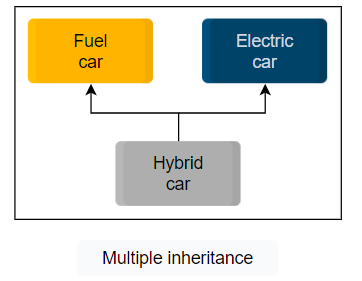
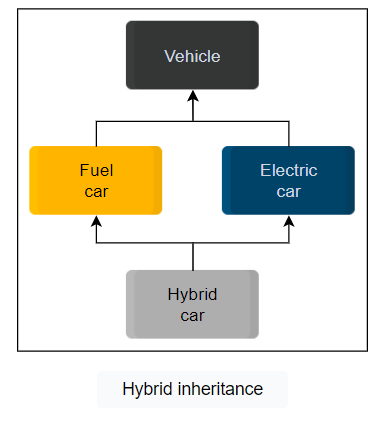
Question 3: Why does Java not support multiple inheritance?
Answer: Java doesn't support multiple inheritance using classes to avoid ambiguity caused by the "diamond problem." Instead, multiple inheritance is achieved using interfaces.
Question 4: Can constructors be inherited in Java?
Answer: No, constructors are not inherited. However, the subclass can call the constructor of the superclass using the super() keyword.
Question 5: How can we prevent inheritance in Java?
Answer: To prevent inheritance, the class can be declared as final. A final class cannot be subclassed.
Question 6: If a superclass has a method that is not overridden by a subclass, which method will be called when invoking that method on an object of the subclass?
Answer: The method from the superclass will be called, as the subclass has not provided its own overriding implementation.
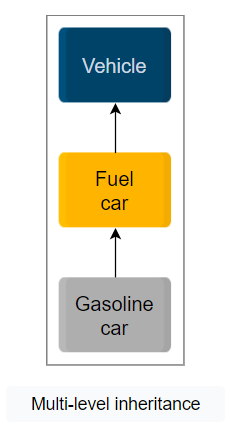
Question 7: Consider a scenario where class A is extended by class B, and class B is extended by class C. If class C does not override a method from class A, which version of the method is called when an object of class C invokes it?
Answer: The method from class A will be called, as class B and class C do not override it.
Question 8: Can a subclass access protected members of a superclass?
Answer: Yes, protected members are accessible to subclasses and classes in the same package.
Question 9: How does inheritance affect memory management?
Answer: Objects of the subclass hold a reference to the parent class, meaning all fields from the superclass are also stored in memory when an object of the subclass is created. This hierarchical allocation can impact memory usage.