
“I was taking a lot of tension about my placements and didn't know how to clear the backend rounds. PrepZone made the concepts so easy, it felt exactly like a senior guiding me. I finally cracked the Capgemini interview today and my parents are so happy! Thank you so much for helping me get my very first job.”
Mock interviews for backend roles
Java · Spring Boot · System Design
Rehearse the backend interview you're actually going to face.
Paste a job description and run its interview loop: voice answer practice (record, then AI feedback), whiteboard system design, and timed coding. You get a report with your score against the hire bar and the exact topics to fix next.
For campus placements, role switches, and senior moves. Setup takes two minutes, or browse free guides.
A note from the founder
Welcome to Preparation Zone.
Preparing for backend engineering interviews takes more than watching tutorials. Interviewers consistently assess the same core areas: Java and Spring Boot, databases, system design, and structured problem solving. Yet most candidates prepare from scattered playlists, notes, and PDFs, with no clear way to measure their progress.
My name is Kishore Bhosale. I am a backend engineer with over thirteen years of experience across startups, banking, and e-commerce. I built Preparation Zone to offer the kind of structured, focused preparation I would have valued earlier in my own career.
Preparation Zone brings that preparation into a single guided track. You follow a structured learning path, work through a question bank with detailed answers, take mock interviews scored against a clear rubric, and revise with spaced repetition. A readiness dashboard shows exactly where you stand and what still needs attention.
Signing up is free. The free plan includes fresher guides, full fresher model answers, your readiness score, and unlimited spaced repetition on fresher practice cards. Pro adds AI mock interviews, job-description loops, voice feedback, design and coding rounds, and Senior-and-above content — see the pricing page for the current rate and any trial offer.
If you are serious about your next backend role, create a free account, pick a company pattern or job description, and rehearse with clarity and confidence.
Thank you for listening.
Kishore Bhosale, founder
preparationzone.com/sample-report
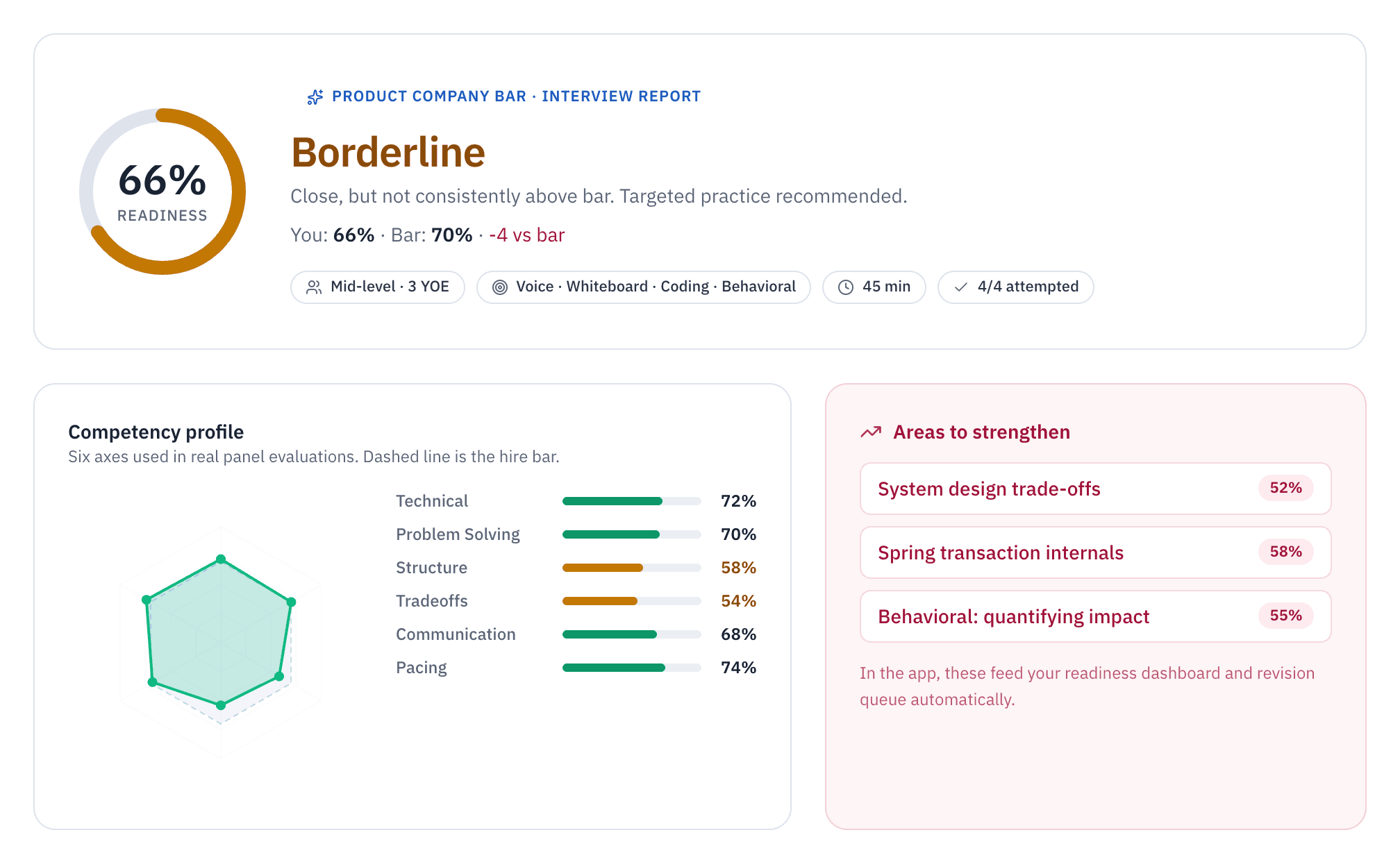
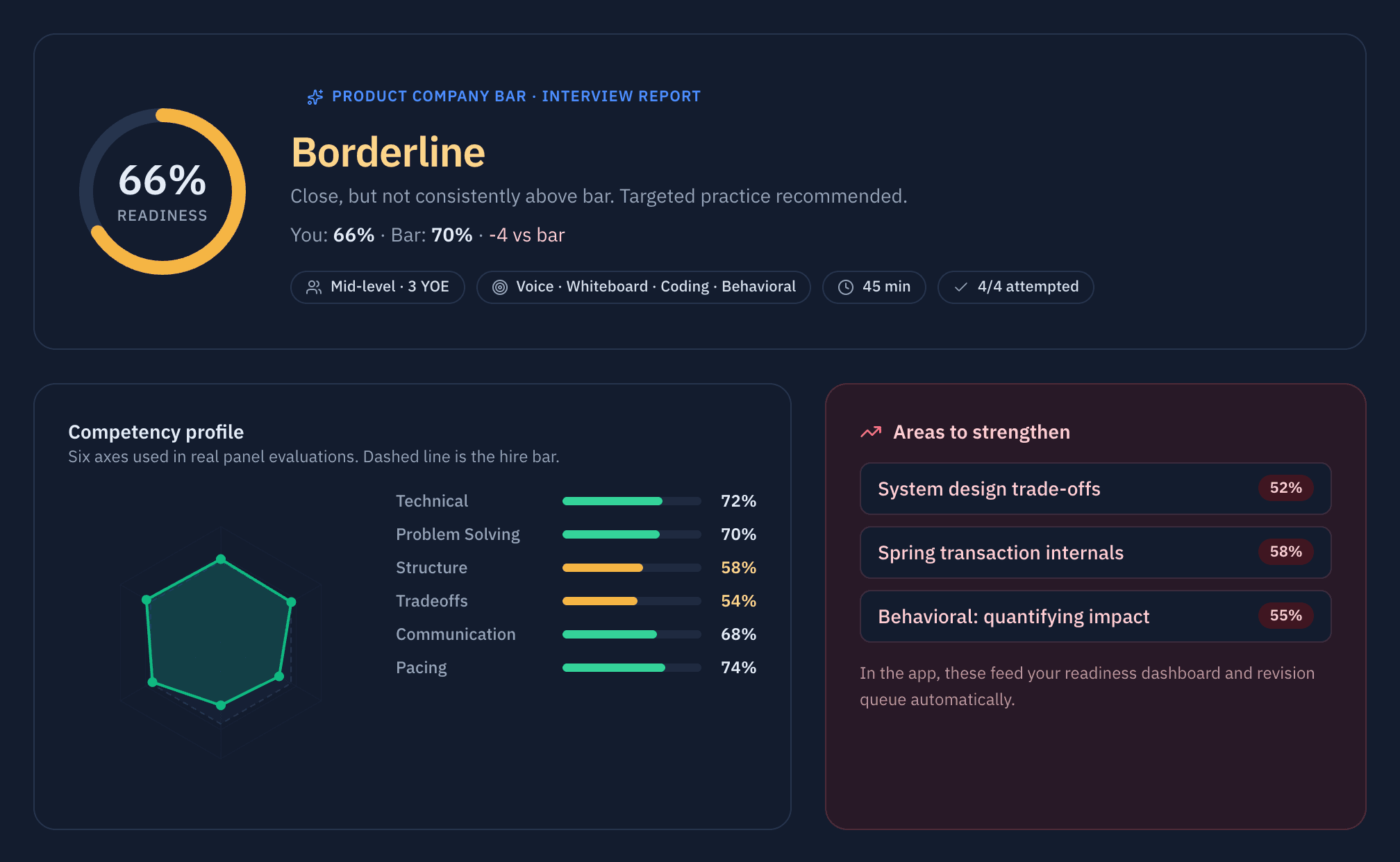
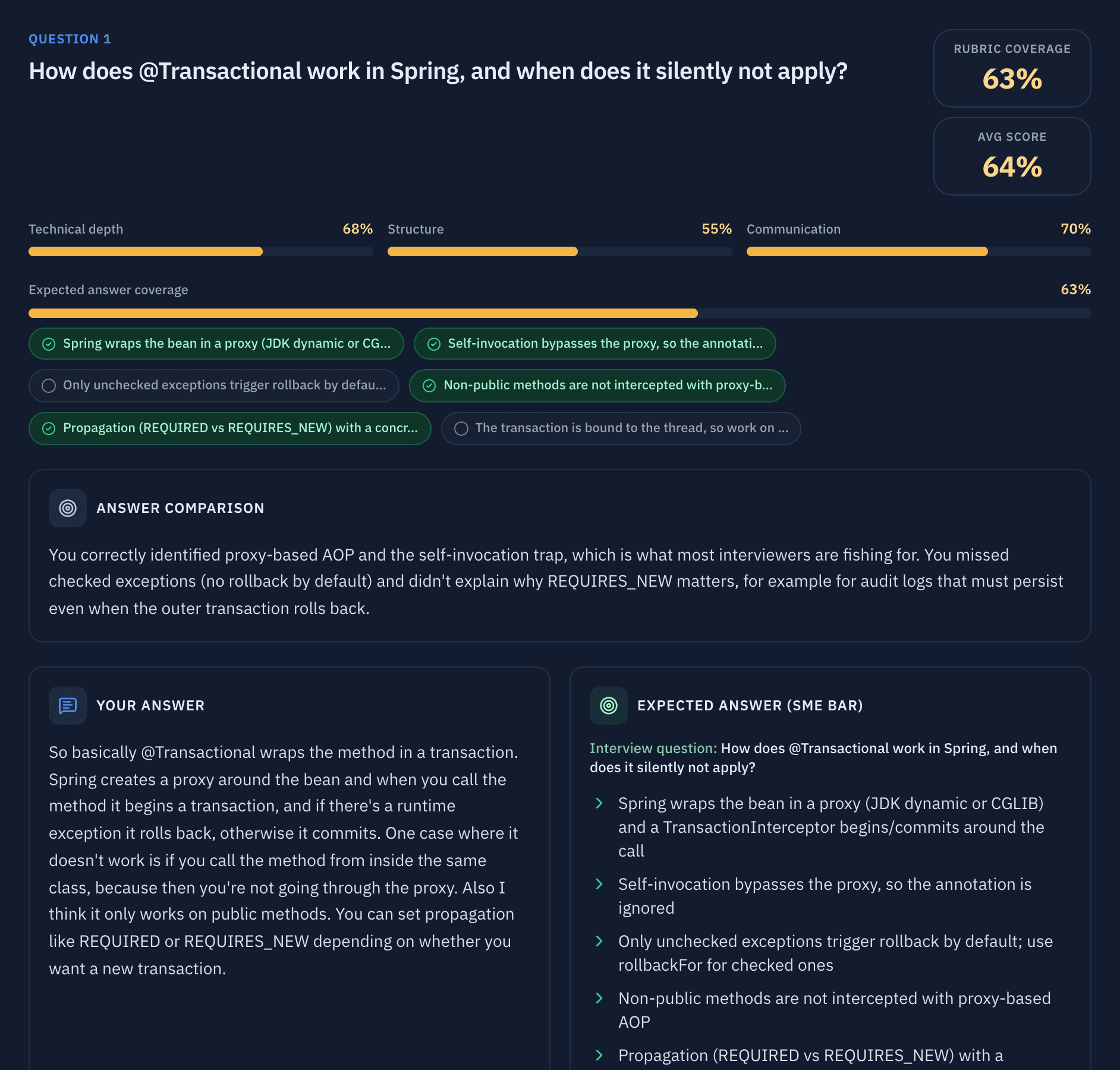
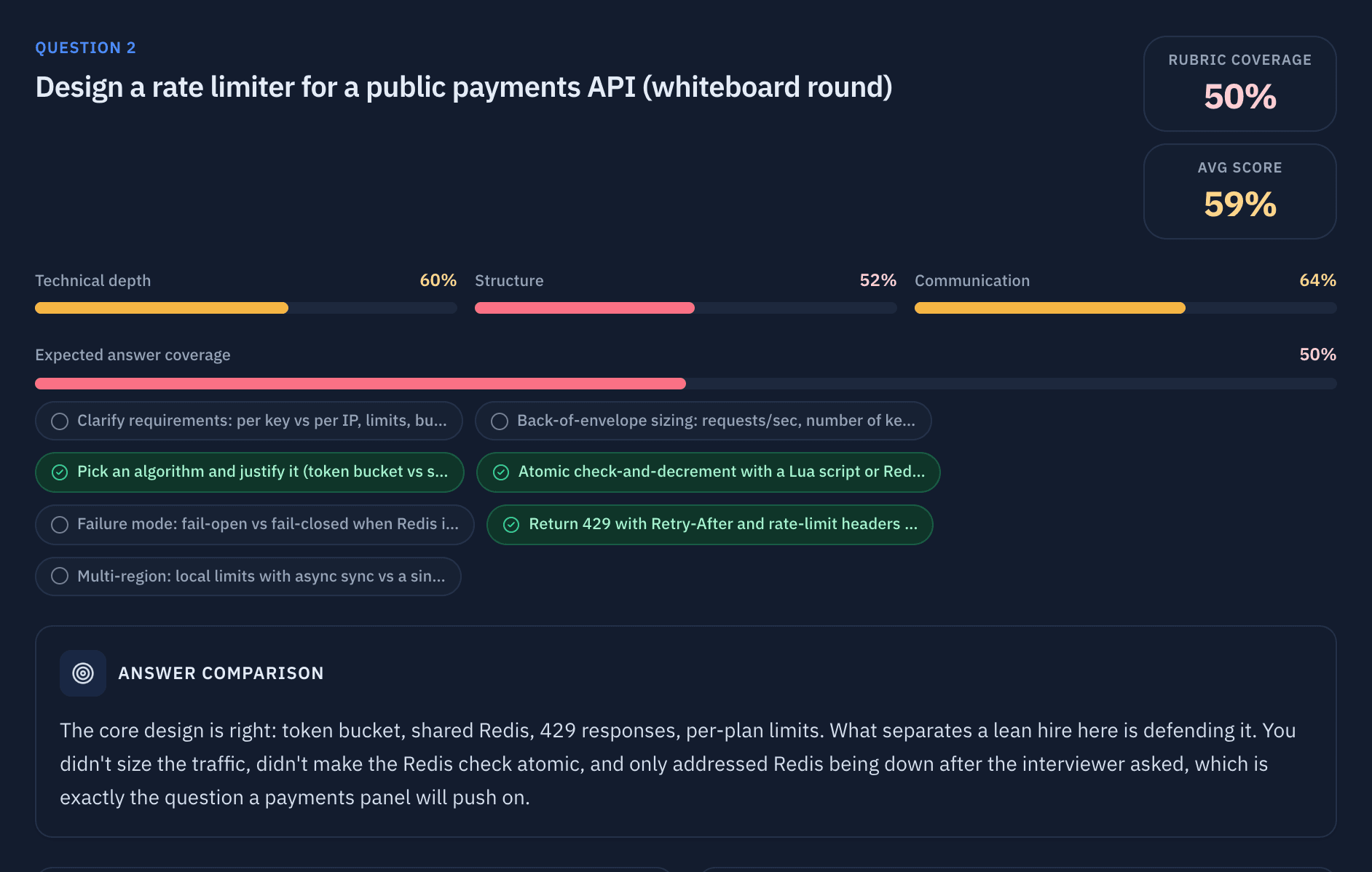
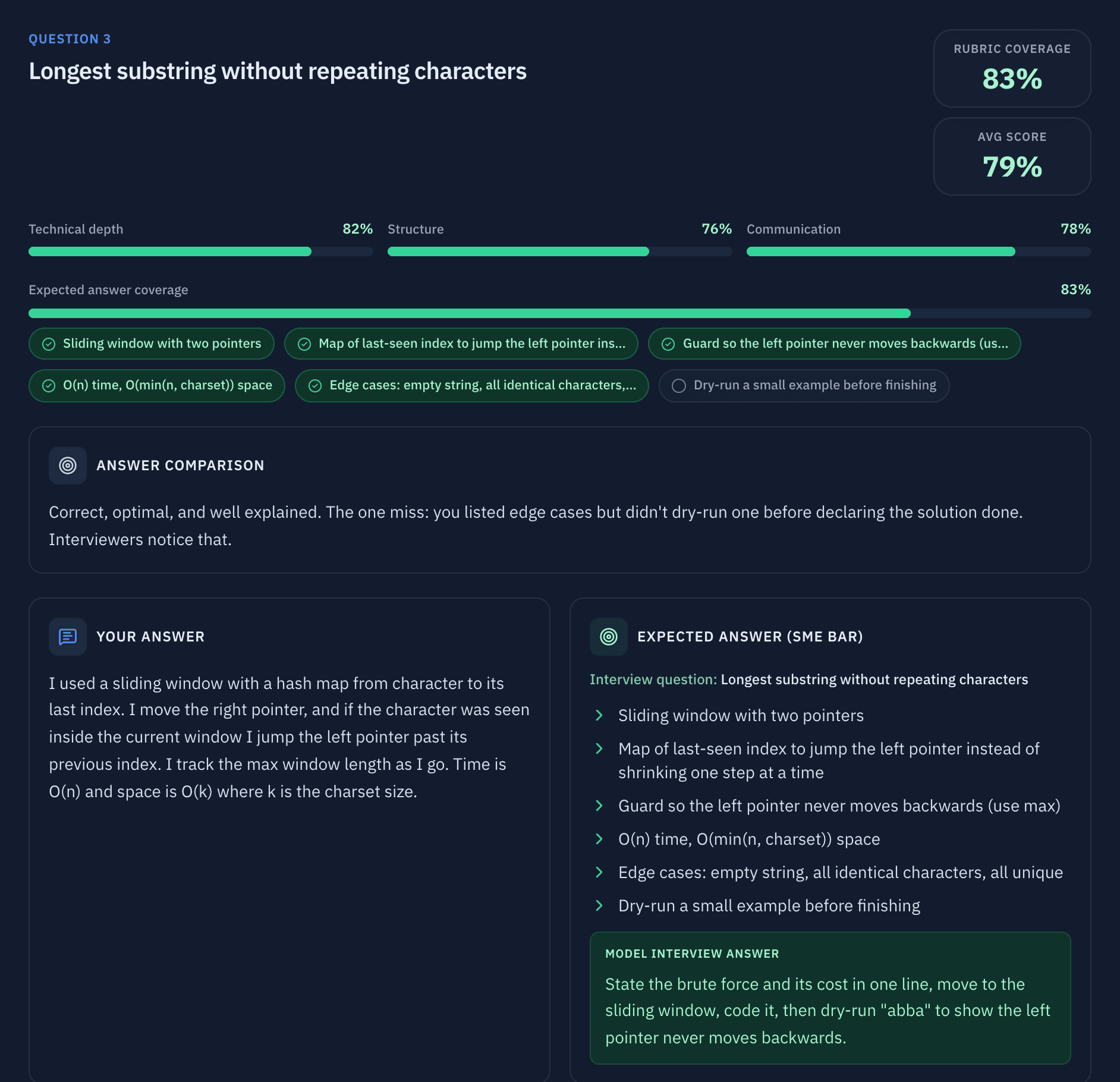
A sample report from a 45-minute mock loop: readiness against the hire bar, a competency profile, and what to revise next. Open the full report
Campus & off-campus
Company-specific interview patterns
Reported emphasis for TCS NQT, Infosys, Wipro, Cognizant, and more — with practice links and a matching mock preset (Pro).
TCS NQT (Ninja)
Foundation + advanced quant · reported Ninja tier
2025–26Infosys (SE / standard)
Reasoning, pseudocode, puzzles, fundamentals
2025–26Cognizant GenC
Aptitude, technical MCQ, SQL, coding, debugging
2025–26Wipro (mass hire)
Aptitude, essay, coding — reported campus funnel
2025–26
Patterns are based on public candidate reports for practice planning only — not official employer materials. Groups include TCS, Infosys, Wipro, Cognizant & Capgemini, Accenture, HCL, Tech Mahindra & LTIMindtree.
Why prep fails
Backend interviews aren't just LeetCode.
Most candidates lose on depth and system thinking. Not because they didn't study, but because they studied the wrong things and never rehearsed out loud.
- 01
Scattered prep, no structure
YouTube, LeetCode, and blog posts, but no clear path through what backend interviews actually test.
- 02
Answers fall apart on follow-ups
Textbook definitions hold up until the interviewer pushes on trade-offs, failure modes, and edge cases.
- 03
No signal on readiness
Weeks of study with no score, no weak-area map, and nobody telling you whether you'd clear the bar.
Mock interview studio
Rehearse the actual interview, not a quiz.
Record voice answers, draw designs, and write code. Every round comes back with structured feedback—not a live two-way interview.
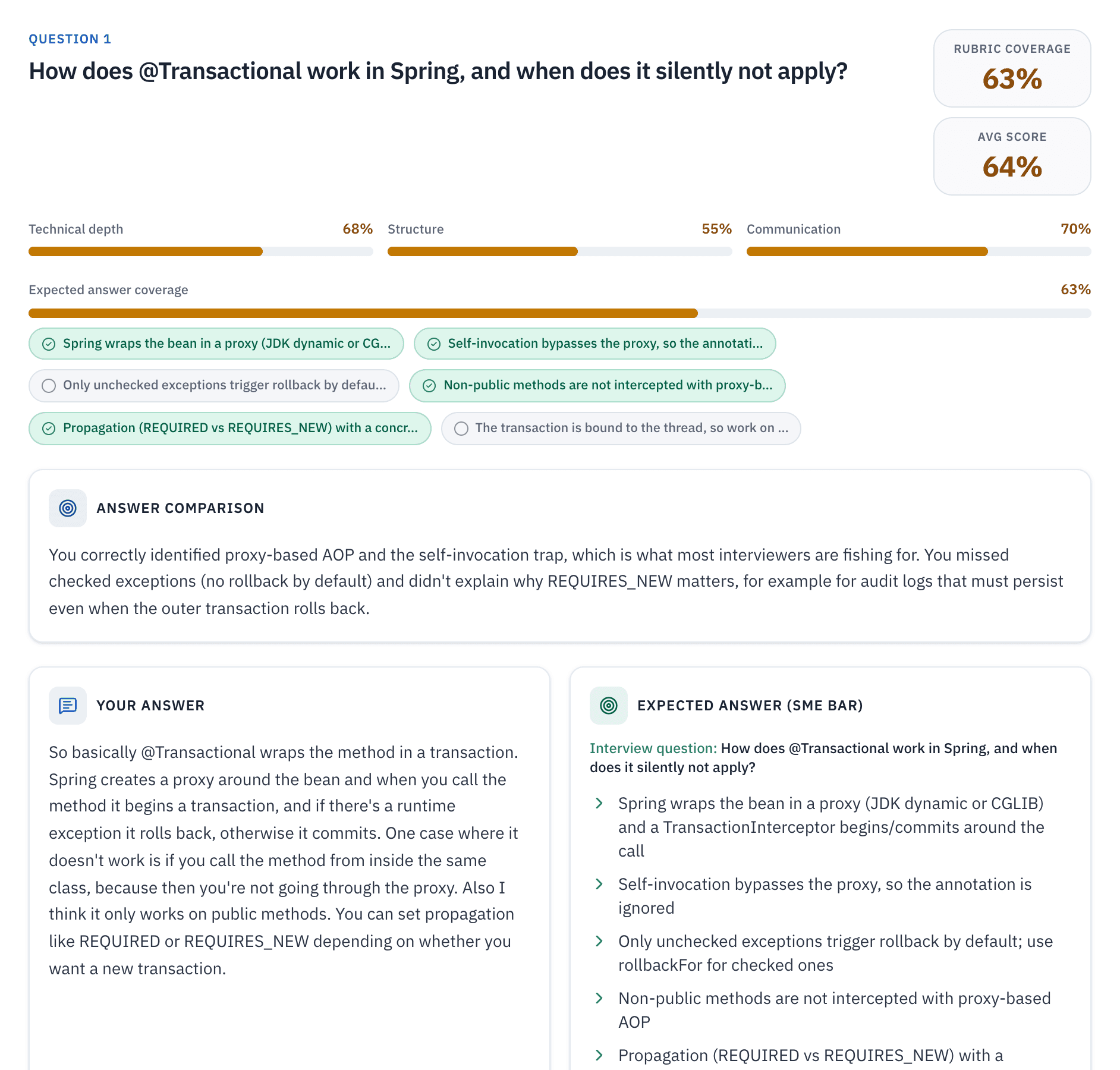
Practice answering out loud
Timed questions with no rubric checklist during the round. Reveal skeptical follow-ups, speak or type, and get AI grading against the full bar when you finish.
preparationzone.com/sample-report#voice
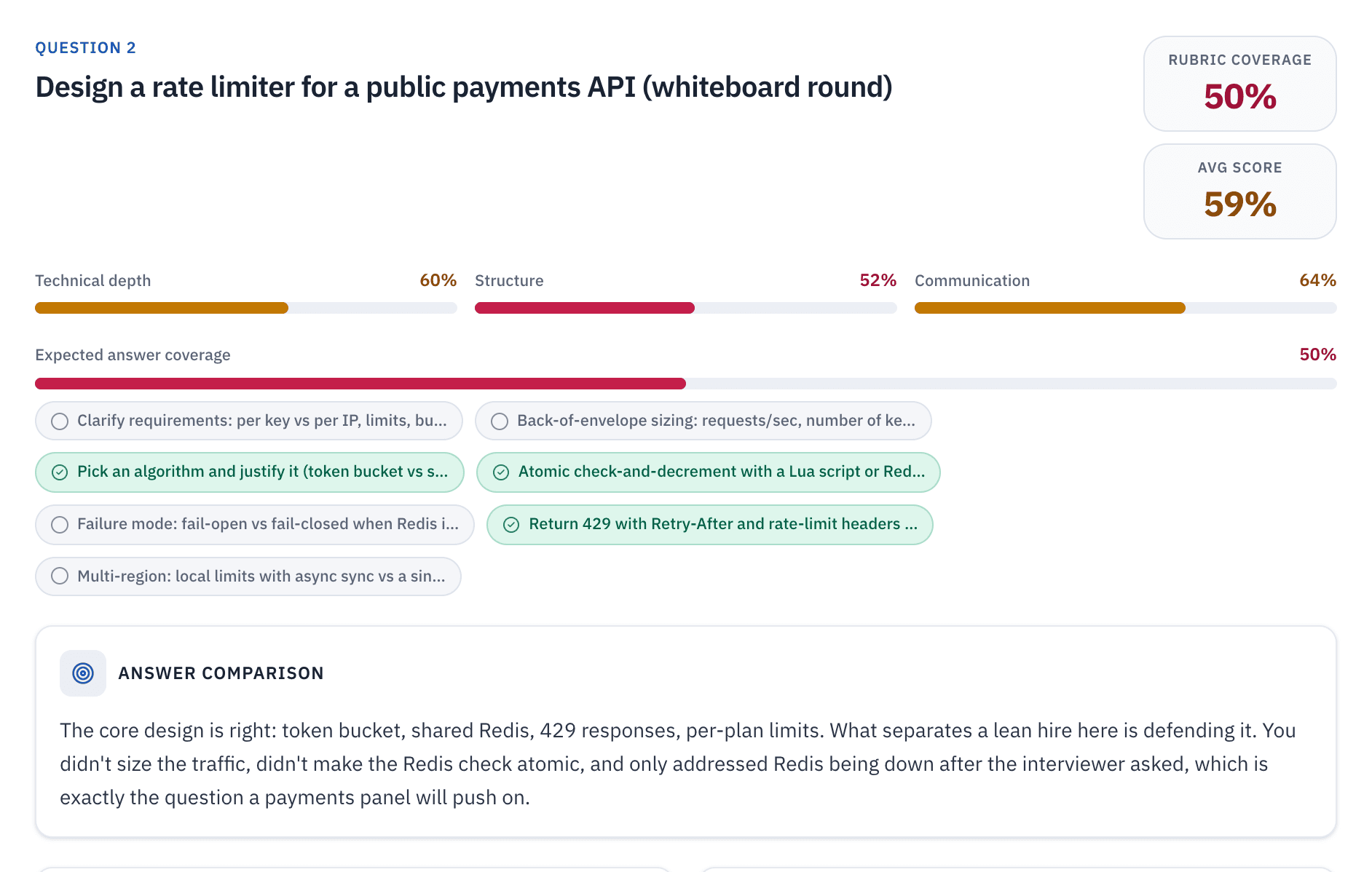
Draw the system under the clock
Sketch your architecture on a whiteboard. Feedback covers the design, the trade-offs you raised, and the questions a panel would push on.
preparationzone.com/sample-report#system-design
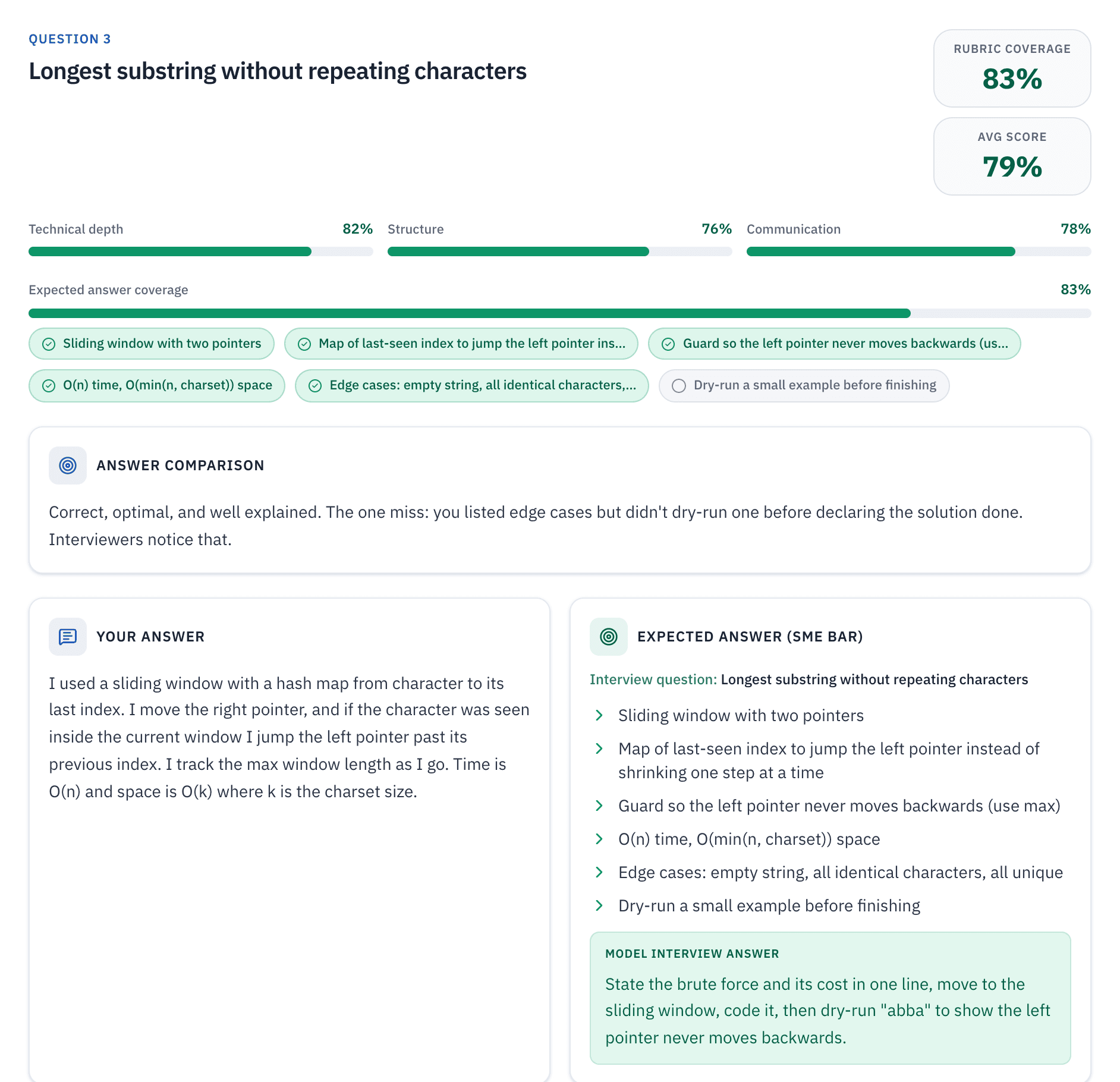
Write real code, then defend it
Solve in an editor in your language, state complexity and edge cases, and get a line-level review of correctness and reasoning.
preparationzone.com/sample-report#coding
How it works
Your interview loop, built from the job description.
- 01
Paste the job description
We map the role's skills and plan the interview loop you're likely to face.
- 02
Add your resume
See which required skills your resume proves, and drill the ones it doesn't.
- 03
Run every round
Each round is scored against the hire bar: ready, borderline, or not ready yet.
Job description
Senior Backend Engineer · Fintech
- Build and scale payment APIs in Java 17 and Spring Boot
- Design event-driven services on Kafka and PostgreSQL
- Deploy and operate microservices on AWS
- Own incidents and mentor junior engineers
JavaSpring BootKafkaSystem designAWSOwnership
Your interview loop
5 rounds- On resume
Coding60 min
Arrays, hashing, concurrency
- Gap to drill
System design60 min
Payment ledger at scale
- On resume
Java deep dive45 min
Memory model, collections
- Gap to drill
Spring & microservices45 min
Transactions, resilience
- On resume
Behavioral45 min
Incident ownership
Plus the prep system around it
Practice bank
Every backend topic, in one place.
Tagged by category and difficulty, from fresher to architect. Bookmark questions, track progress, and revise on a schedule.
From candidates
How engineers used PreparationZone.
Prep journeys from candidates who structured their study with PreparationZone.
“PreparationZone has become a useful part of my regular learning routine. I particularly like testing my preparation through the mock interviews, as the interview simulation is extremely helpful in assessing my knowledge and identifying areas where I need to improve. It helps me stay consistent, sharpen my technical skills, and remain interview-ready whenever an opportunity comes along.”
“I have been using PreparationZone to keep my technical knowledge up to date and regularly test my preparation. It has been especially helpful for me as a Team Lead, where I also take technical interviews at work. The questions and mock interview experience help me stay prepared and confident. I find the platform extremely useful for anyone who wants to keep their interview preparation going regularly.”
Used PreparationZone for your prep? Share your story
Pricing
Free for freshers, forever. Pro is ₹99/month.
Pro access
₹99a month
Or stay on Free forever. Pro renews monthly, cancel anytime.
Free forever
- Every fresher guide & model answer, in full
- Fresher projects, placement cram packs & unlimited spaced-repetition on fresher practice cards
- A 30% preview of Senior, Staff & Architect content
Pro adds
- Senior, Staff & Architect content in full
- Unlimited AI mock interviews
- Voice, system design & coding rounds
- Interview loops from your job description
- Unlimited revision, full readiness report & cram packs
No card needed. Your progress stays yours on Free.
FAQ
Backend interview and placement prep: common questions
Straight answers to what students and engineers ask most before their interviews.
How do I prepare for backend developer interviews in campus placements?
Start with Core Java (OOP, collections, exceptions, multithreading), then Spring Boot and REST APIs, then SQL and databases. Practice interview questions after each topic, add one solid backend project to your resume, and run a few timed mock interviews in the last two weeks. PreparationZone's learning tracks follow exactly this order.
Which topics should a fresher focus on for Java backend roles?
Freshers are mostly tested on Core Java fundamentals, collections, basic concurrency, Spring Boot basics, SQL queries and joins, and coding problems. Low level design and introductory system design questions show up in stronger product companies, so cover them once the basics feel solid.
Is PreparationZone free to use?
Yes. The Free plan is free forever and covers fresher-level preparation: your dashboard, learning progress and streak, every fresher learning guide and practice question with full model answers, fresher project ideas, placement aptitude and formula revision packs, unlimited spaced-repetition on fresher practice cards, and your readiness score. Free does not include AI mock interviews. Pro (₹99/month) adds Senior, Staff and Architect content in full, AI mock interviews with transparent monthly caps, job-description interview loops, voice, system design and coding rounds, unlimited revision, the full readiness report, and the last-day and last-hour packs for your target level.
Is PreparationZone useful for experienced engineers switching jobs?
Yes. Beyond the fundamentals, PreparationZone covers system design, low level design, microservices, Kafka, distributed systems, and cloud — the topics that decide senior backend interviews. Questions are tagged from fresher to architect level so you can skip what you already know.
How do mock interviews on PreparationZone work?
Default is blind mock mode: you answer without seeing the rubric, defend panel-style follow-ups, then get AI grading on submit (speak or type). Guided self-review is there when you want to reveal expected points and study. Paste a job description to plan the full loop—coding, system design, LLD, Java, Spring, behavioral—and run each round against the hire bar. Design rounds use a whiteboard; coding rounds use an in-browser editor. Try the sample report on the website before upgrading. Results feed the readiness dashboard.
Can I get personal placement guidance?
Yes. PreparationZone runs free tech talks for colleges and coding clubs, and weekly office hours where you can bring your top prep questions. Details are on the guidance page.
Still unsure where to start? Get placement guidance or browse the free guides.
Your next interview won't wait.
Run one mock round today and see exactly where you stand against the bar.